

A wallet can lose more money through an overlooked token approval than through a bad gas estimate. That sounds counterintuitive because gas is the cost users see immediately, while approvals often look like harmless setup steps. In reality, an approval can create a future permission: a smart contract may later be allowed to move a specified token amount from your wallet, sometimes without another confirmation at the moment of transfer.
For US DeFi users installing a browser wallet such as Rabby, this changes the security question. The goal is not merely to approve transactions quickly or minimize network fees. It is to manage permissions deliberately, understand what the wallet is simulating, and spend gas where it meaningfully reduces exposure. Recent Chrome Web Store disclosures also remind users that wallet security includes a less glamorous layer: understanding what data an extension handles and reviewing its developer privacy information.
Why token approvals are different from ordinary transfers
Most fungible tokens used in DeFi follow a common contract pattern. Your wallet holds the token balance, but a decentralized exchange, lending protocol, or vault contract may need permission to move tokens on your behalf. An approval transaction writes an allowance into the token contract. That allowance links your address, the spender’s address, and an amount the spender may use.
The important distinction is temporal. A transfer normally happens when you sign it. An approval can authorize a later transfer. If the approved contract is compromised, incorrectly designed, or not the contract you thought you were interacting with, the permission may become a continuing liability. The danger is therefore not just the transaction being signed today; it is the authority that survives afterward.
This is why “I only approved a small swap” can be an incomplete description. Some applications request the exact amount needed, while others request a very large allowance for convenience. A large allowance can reduce repeated approval transactions and save future gas, but it also increases the potential loss if the spender is abused. The correct choice depends on how much trust you place in the application, how often you use it, and how costly it would be to revoke or renew permission later.
Approval management is a risk-budgeting problem
A useful mental model is to treat every allowance as a risk budget. The budget has at least three dimensions: the amount authorized, the identity and behavior of the spender, and the time the permission remains active. Users often focus only on the first dimension, but a modest allowance to a questionable contract may be more concerning than a larger allowance to a well-understood protocol used frequently.
That does not mean familiar protocols are risk-free. Audits, reputation, and long operating histories can reduce uncertainty, but they cannot eliminate contract bugs, governance changes, compromised interfaces, or malicious upgrades where upgradeability is involved. Wallet warnings and transaction simulations are valuable precisely because they add context before signing; they are safeguards, not guarantees.
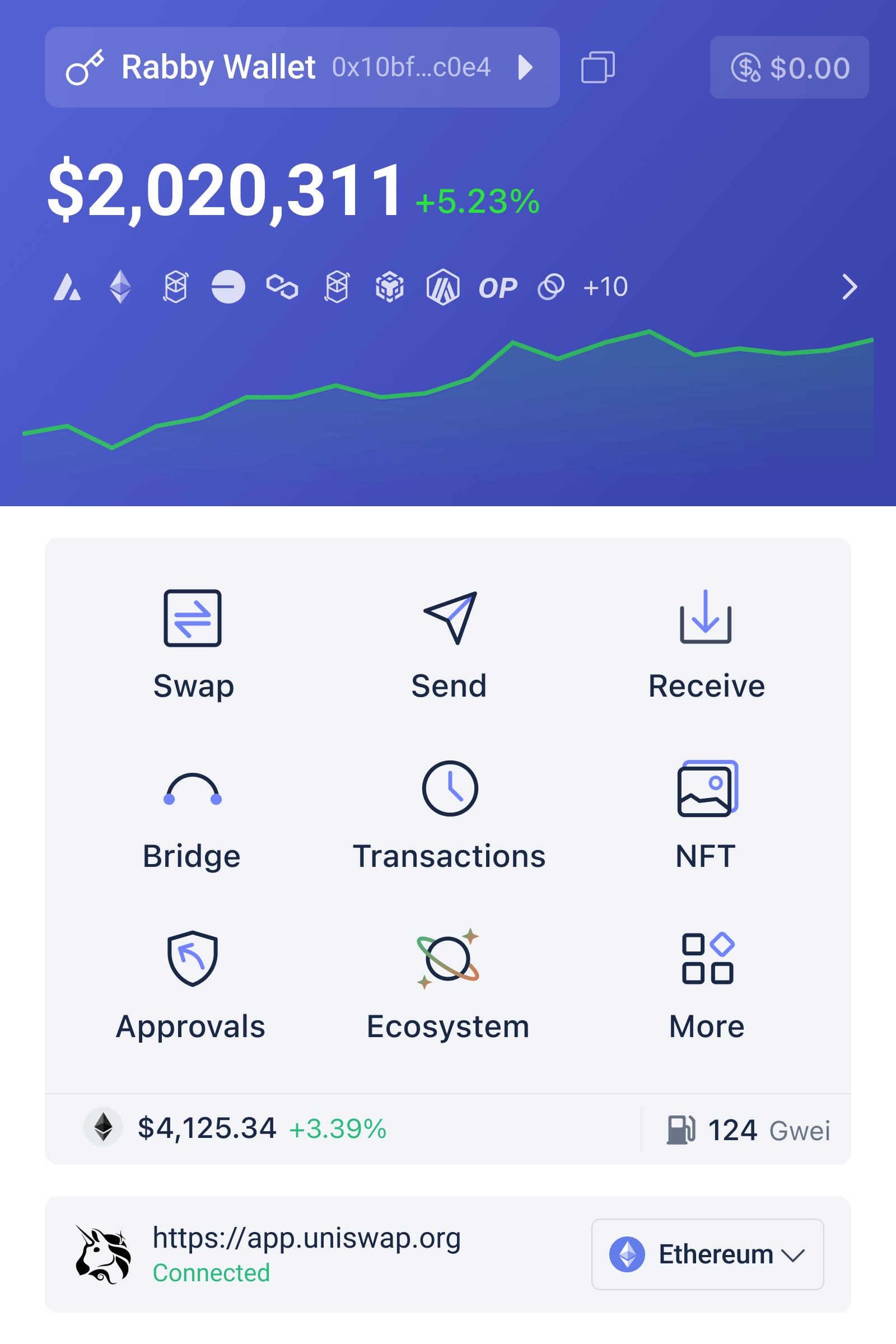
When reviewing an approval in Rabby, look beyond the token symbol and the dollar estimate. Ask which contract is receiving permission, whether the requested amount is exact or effectively unlimited, and whether the action is consistent with what you intended to do. A token approval that appears during a simple deposit deserves a different reading from one attached to an unfamiliar claim page or an urgent “reward” offer.
Users who are ready to install the wallet should obtain it through a source they have independently verified, such as the official rabby extension download resource, and should still confirm the extension identity in the browser’s own store. A wallet extension cannot protect a user who installs an impostor or enters a recovery phrase into a web page.
Where gas optimization helps—and where it misleads
Approval management has a direct gas dimension. On networks where fees are high, setting a narrowly scoped allowance may require an additional approval transaction before the intended swap or deposit. Users may therefore choose a larger allowance to avoid paying for repeated approvals. This is a rational optimization when the protocol is trusted, the wallet is actively used, and the saved fee is meaningful relative to the exposure.
But gas optimization can become false economy. Saving a small transaction fee while leaving an unnecessary permission active may increase the amount at risk by far more than the fee saved. The relevant comparison is not “one transaction versus two.” It is the expected cost of extra gas against the probability and potential severity of an unwanted transfer. Exact probabilities are rarely available, so the decision must remain qualitative, but the structure of the trade-off is clear.
There is also a technical limitation: not every approval can be changed in the same way. Some token contracts implement approval behavior that requires setting an allowance to zero before assigning a new nonzero amount. Others may have unusual or nonstandard designs. Revocation itself is an on-chain transaction and therefore consumes gas. On a congested Ethereum mainnet, that cost may be material; on a lower-fee network, routine cleanup may be more practical. Network choice changes the economics, not the underlying security principle.
A sensible operating rule is to use smaller or exact approvals for one-off interactions, experimental applications, and contracts you do not expect to revisit. Larger allowances may be defensible for a frequently used protocol, but they should be treated as deliberate standing permissions rather than invisible defaults. Periodic review matters because an allowance can remain after the user has stopped using the application.
Wallet security begins before the transaction screen
Transaction review is only one part of wallet security. The browser environment matters too. Extensions can interact with websites, display transaction data, and handle information governed by their privacy practices. The recent Chrome Web Store disclosure for Rabby states that the wallet handles data as described in its listing and developer privacy policy. That disclosure does not by itself establish whether a wallet is safe or unsafe; it gives users a reason to read the data-handling information instead of treating every extension as a black box.
Operational habits remain more important than polished interface design. Keep substantial funds separated from a wallet used for frequent DeFi experimentation. Consider a hardware signer for assets that do not need to move often. Never reveal a seed phrase to a support agent, website, or extension pop-up. Verify the network, recipient, contract, token, and expected action before signing, especially when a transaction involves a permit or approval rather than a straightforward transfer.
Permits deserve particular attention. Some token standards allow a signed message to authorize spending without an immediate on-chain approval transaction. This can improve user experience and sometimes reduce gas, but “no approval transaction” does not mean “no approval risk.” A signature can still grant spending authority. The security question has shifted from a visible state-changing transaction to the contents, domain, deadline, and spender encoded in the message.
A practical review framework for DeFi users
Before signing, classify the action. Is it a direct transfer, an approval, a permit, a contract interaction, or a combination? Then identify the object of permission. Which asset is involved, who can spend it, and how much authority is being granted? Finally, decide whether the permission has a sensible lifespan. A one-time experiment should not automatically create a long-lived allowance.
After using a protocol, review permissions as part of wallet maintenance rather than waiting for a warning. Remove allowances that are obsolete, particularly for applications that were used once, promotions that have ended, or contracts whose interface no longer matches your expectations. Keep records of addresses and networks when managing several chains; a permission on one network does not automatically equal a permission on another, but confusion between networks can still lead to poor decisions.
What should users watch next? Wallets are likely to keep improving simulation, human-readable transaction decoding, and permission dashboards because the main usability problem is not that blockchains lack security primitives. It is that those primitives are difficult to interpret under time pressure. The important test will be whether warnings explain consequences clearly without creating alert fatigue. If every interaction is marked dangerous, users may stop distinguishing meaningful risk from routine complexity.
Frequently asked questions
Should I always approve only the exact token amount?
Exact approvals reduce the authority left behind, which is attractive for unfamiliar or one-time applications. They may require another approval later and therefore cost more gas. For a trusted protocol used frequently, a larger allowance can be a reasonable convenience, but it should be reviewed as a standing permission rather than accepted automatically.
Does revoking an approval recover tokens already spent?
No. Revocation prevents or limits future use of the allowance; it does not reverse a transfer that has already occurred. If an unauthorized transfer happens, recovery depends on the chain, the receiving address, and whether any practical intervention is possible. Prevention and prompt monitoring are therefore more valuable than relying on revocation after the fact.
Can a wallet guarantee that a DeFi transaction is safe?
No. A wallet can make transaction details easier to inspect, simulate likely outcomes, and flag suspicious patterns, but it cannot guarantee the honesty or future behavior of a smart contract. Users still need to verify the application, understand the permission requested, and avoid signing messages they cannot interpret.
The sharper lesson is that gas and security are not opposing goals. Both are forms of resource management. Gas is a visible, immediate cost; approval exposure is a contingent cost that may remain hidden until something goes wrong. Good wallet practice balances them by paying for tighter permissions when uncertainty is high, using efficient allowances when trust and usage justify them, and regularly clearing authority that no longer serves a purpose.
